

Table of Contents
Many teams today are under pressure to move faster, reduce manual work, and better control spending. eProcurement supports these goals by bringing every part of the purchasing process into one digital workflow. Instead of managing emails, paper forms or disconnected tools, buyers can approve requests, compare suppliers, and place orders in a single system.
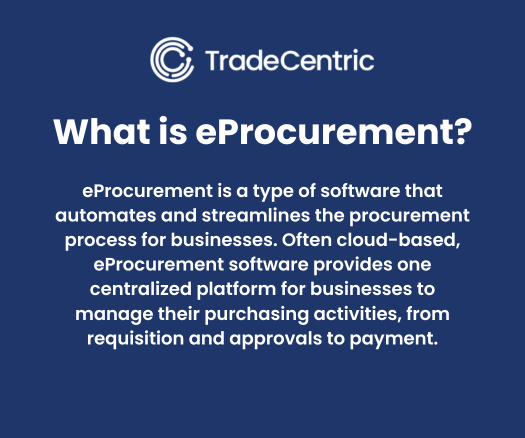
eProcurement refers to using electronic methods and technology to carry out procurement activities. This enables businesses, organizations, and governments to procure goods and services electronically without manual intervention. eProcurement can take different forms, including e-tendering, e-auctioning, electronic data interchange e-cataloging, eProcurement solutions, and e-invoicing.
How Does eProcurement Work?
The eProcurement system automates traditional procurement processes, making them more transparent, faster and more effective. Here is how it works:
- Identification of Need: The procurement process begins with identifying a need for a particular product or service.
- Vendor Registration: The buyer creates an online portal for procurement and invites vendors to register on the portal.
- Request for Quotation: The buyer sends a request for quote (RFQ) to the registered vendors. The RFQ contains details of the product or service required, specifications, and delivery timeline.
- Vendor Response: The suppliers review the RFQ and respond with their quotes. They may also provide additional information such as delivery terms, warranty, and payment terms.
- Evaluation of Quotations: The buyer evaluates the quotes from the vendors and selects the most suitable vendor.
- Purchase Order: Once the vendor is selected, the buyer organization issues a purchase order (PO) to the vendor. The PO contains details such as quantity, price, delivery schedule, and terms and conditions.
- Payment: The vendor delivers the product or service as per the PO, and the buyer organization makes the payment through the online portal.
If your workflow includes manual catalog updates or disconnected ordering, explore how TradeCentric automates these exchanges.
Procurement Process vs. Purchasing Process
Purchasing and procurement are often used interchangeably, but they have different meanings.
What is Purchasing?
Purchasing refers to the process of acquiring goods or services from a supplier to an external source for the purpose of meeting an organization’s needs. It involves:
- Selecting suppliers
- Negotiating contracts
- Placing orders
- Receiving and paying for goods or services from preferred suppliers
What is Procurement?
Procurement (or procurement platforms and procurement teams), on the other hand, encompasses the entire process of acquiring goods and services. It includes:
- Planning, sourcing purchasing, and managing suppliers
- Identifying the organization’s needs and best sources to meet them
- Negotiating contracts
- Managing supplier relationships
- Ensuring that goods and services are delivered on time, at the right price, and with the expected quality.
Understanding this difference is important because eProcurement supports the broader process, not just the transaction itself.
How Procurement Software Supports Buyers
Procurement software is business software that helps organizations automate and manage the procurement process. This software typically includes features such as:
- Vendor management
- Purchase order management
- Invoice management
- e-Ordering and contract management
An eProcurement software can streamline the procurement process by automating routine tasks such as purchase requisitions exchanging supplier contracts, purchase orders, and approvals. It can also help organizations manage supplier and vendor relationships together, track inventory, and analyze purchasing data to identify opportunities for cost savings and process improvements.
See how TradeCentric enhances your existing procurement software by linking it directly to supplier eCommerce systems
Who Can Use Procurement Software?
Procurement software can be used by many organizations, from small businesses to large enterprises. It can be deployed on-premises or in the cloud, and procurement solutions can integrate with other business systems such as ERP and accounting software.
Benefits of eProcurement
A well built eProcurement system helps buyers work faster, save money and reduce risk. The most important advantages include the following:
- Access to more suppliers: Buyers can access suppliers’ online catalogs and make purchases online, reducing the need for physical visits to suppliers’ premises.
- This enables buyers to find better deals, compare prices, and negotiate better terms with suppliers.
- Greater transparency and accountability: eProcurement provides an audit trail that shows the entire procurement process, from the initial request for goods or services to the payment process.
- This helps to prevent fraud and corruption and also helps to ensure that the procurement process is fair and open.
- Lower costs: The system enables buyers to streamline their procurement processes, reducing the time and resources required to carry out procurement activities.
- It also reduces the cost associated with paper-based processes like: of paperwork, storage, and transportation
- Better data accuracy: The system eliminates the errors and inconsistencies in procurement procedures that often arise from manual processes, reducing the risk of data duplication, errors, and inaccuracies.
- This enables buyers to make more informed procurement decisions based on accurate and reliable data.
- Simplified operations: The system automates many procurement processes, including generating purchase orders, receipt of goods, and payment processes.
- This reduces the workload for procurement department staff, enabling them to focus on more strategic activities.
- Environmental benefits: The system eliminates the need for paper-based processes, reducing the amount of paper used and the associated waste.
- This helps to reduce the environmental impact of procurement processes, making them more sustainable.
Leading eProcurement Applications
An integral key to the procurement process is knowing who to choose. Take a look at some of the providers partnered with TradeCentric:
Coupa
Coupa is a cloud-based application that provides spend management assistance to various industries, including healthcare, retail, technology, automotive, and more. It enables businesses to control finances and maximize profits by providing real-time visibility gain complete visibility and control of the supplier networks’ entire P2P process.
Coupa streamlines the eProcurement process, from budget management to optimizing expenditure plans, ensuring a flexible model from end to end. It also facilitates order management, making the process more efficient and effective.
JAGGAER
Jaggaer is a cloud eProcurement platform used widely in education, manufacturing and the public sector. Jaggaer’s solutions provide enterprise buyers and suppliers with smart-match recommendations that align buyer needs with supplier capabilities. Their solutions alleviate many of the repetitive, behind-the-scenes tasks required to facilitate enterprise commerce.
Oracle Procurement Cloud
Oracle Procurement Cloud is an enterprise-level application designed to assist businesses involved in sales and purchasing. Oracle provides automation, control, and collaboration tools for the entire P2P process while granting real-time visibility into supply chain changes negotiating supplier contracts, inventory management, and other critical business updates.
SAP Ariba
SAP Ariba is a cloud-based, business-to-business (B2B) and eProcurement software solution that connects suppliers and buyers directly on a single platform, without the need for a broker. SAP Ariba provides eProcurement support and supply chain management capabilities to businesses of all sizes. Key features of SAP Ariba include supplier management, procurement catalogs, procure-to-pay, procurement solutions, and more.
eProcurement and Supply Chain Management
Overall, eProcurement services can play an important role in supply chain management by:
- Improving efficiency: Automate many routine tasks in the procurement process, such as supplier selection, purchase order generation, and invoice processing. This can save time and reduce errors, leading to greater efficiency in the supply chain.
- Greater visibility: Provide real-time data on vendor relationships, inventory levels, and purchasing trends. This information can optimize supply chain operations, improve inventory management, and reduce supply chain risks.
- Increased collaboration: Facilitate collaboration between suppliers and buyers by providing a centralized platform for communication and document sharing. This can help to build stronger relationships with suppliers and improve supply chain responsiveness.
- Cost savings: Help to reduce procurement costs by automating manual tasks, improving supplier selection, and negotiating better prices with suppliers. This can lead to significant cost reduction over time.
By leveraging eProcurement technologies, organizations can achieve greater agility and competitiveness in today’s fast-paced business environment.
Enhance Your eProcurement Strategy With TradeCentric
With 220+ eProcurement solutions and 75+ eCommerce systems partnered with TradeCentric, we help thousands of companies each day enhance B2B trade. Contact us to see how we can make it happen.